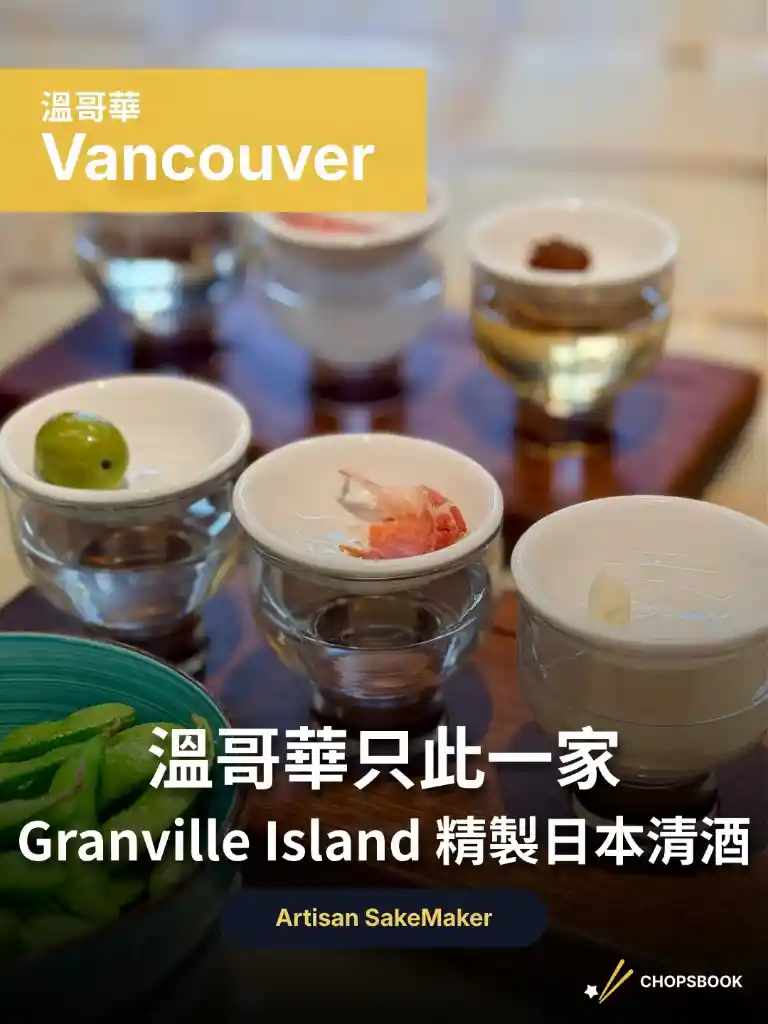
Artisan SakeMaker on Granville Island: Handmade Sake Brewed in Vancouver
Vancouver's only sake brewery crafts small-batch OSAKE on Granville Island with BC-grown rice, with tastings and small plates next door
Restaurant Map (1)
Restaurants in this article (1)
Tap through for ratings, menus and member reviews.
Key takeaways
Artisan SakeMaker is Vancouver's only sake brewery, handcrafting OSAKE sake on Railspur Alley on Granville Island with rice grown in British Columbia. It marked its 20th anniversary in 2026. Next door, Sake & Tapas Central pours tasting flights and serves small plates, and first-time visitors can start with the Signature & Traditional flight.
- What to try first: The Signature & Traditional flight covers Junmai Nama, Junmai Nama Genshu and Junmai Nama Nigori. For sparkling and fruit notes, try the Specialty & Bubbly flight.
- Even without drinking: Small plates include the Wagyu Meatball Don, Karaage Bowl, Onigiri Set, Octopus Carpaccio and Amazake Salted Edamame, and dessert includes Rice Cream, a sake kasu ice cream.
- Getting there: The address is 1339 Railspur Alley, Vancouver, BC V6H 4G9, on Railspur Alley on Granville Island, near the Public Market. The phone number is (604) 685-7253 and the official site is artisansakemaker.com.
What Artisan SakeMaker is
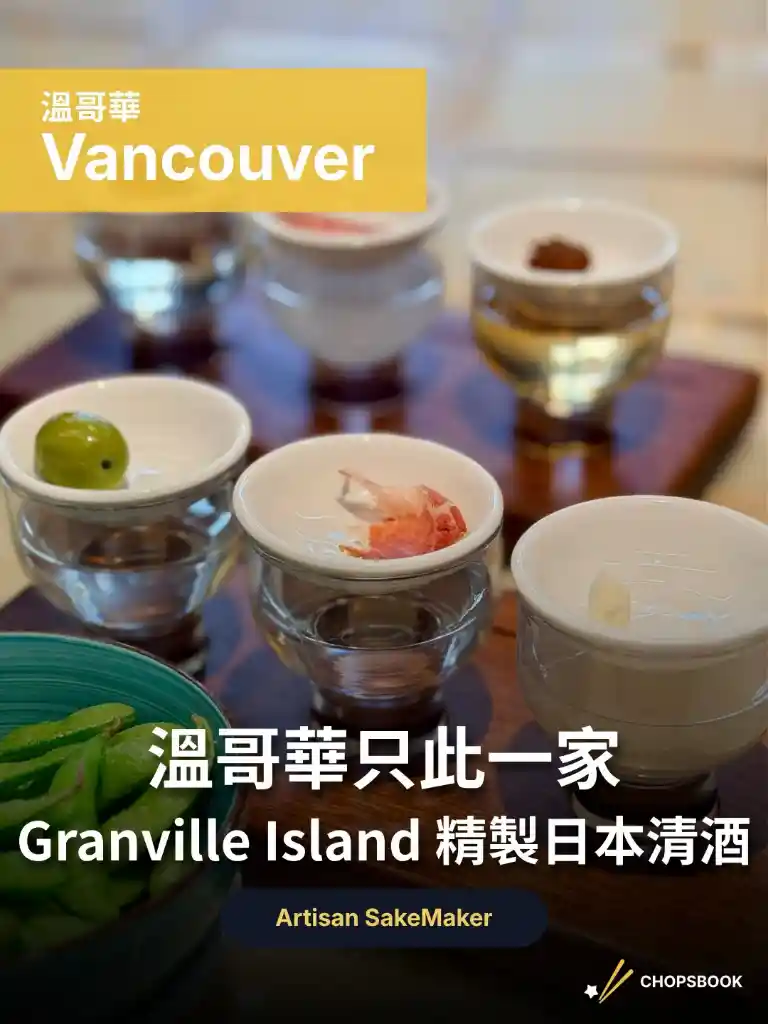
Railspur Alley on Granville Island hides Vancouver's only sake brewery. Inside Artisan SakeMaker, the whole process happens under one small roof: washing rice, making koji, fermenting and bottling. Step inside and the air carries a light rice aroma.
The house label is OSAKE, described on the official site as Canada's first locally produced fresh premium sake. The brewing philosophy centres on sustainability, all-natural methods and local ingredients, and every release is a small handmade batch. In 2026 the brewery marked its 20th anniversary, still working the same way: local ingredients, slow brewing, and no interest in volume for its own sake.
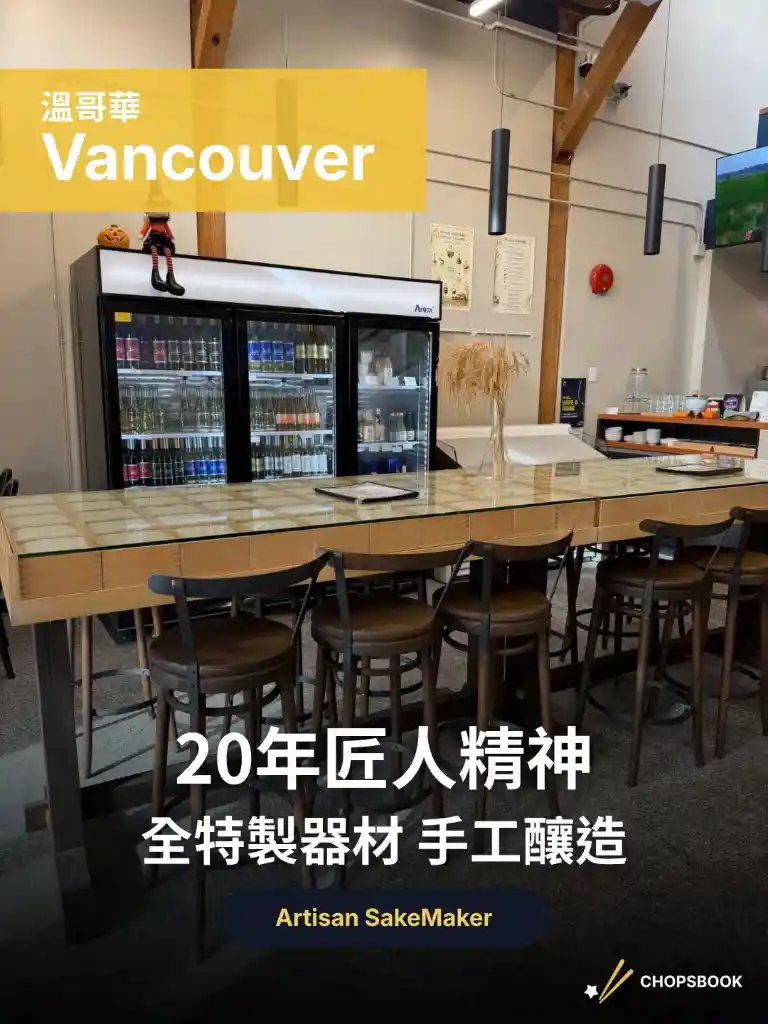
Beside the brewery, Sake & Tapas Central opened in 2025 as the tasting room, pouring flights and serving small plates, with guided pairings. For a first-time sake drinker it is a good place to start, because staff take time to explain each pour and what it goes with, without assuming prior knowledge.
Founder Masa Shiroki: a late start in sake
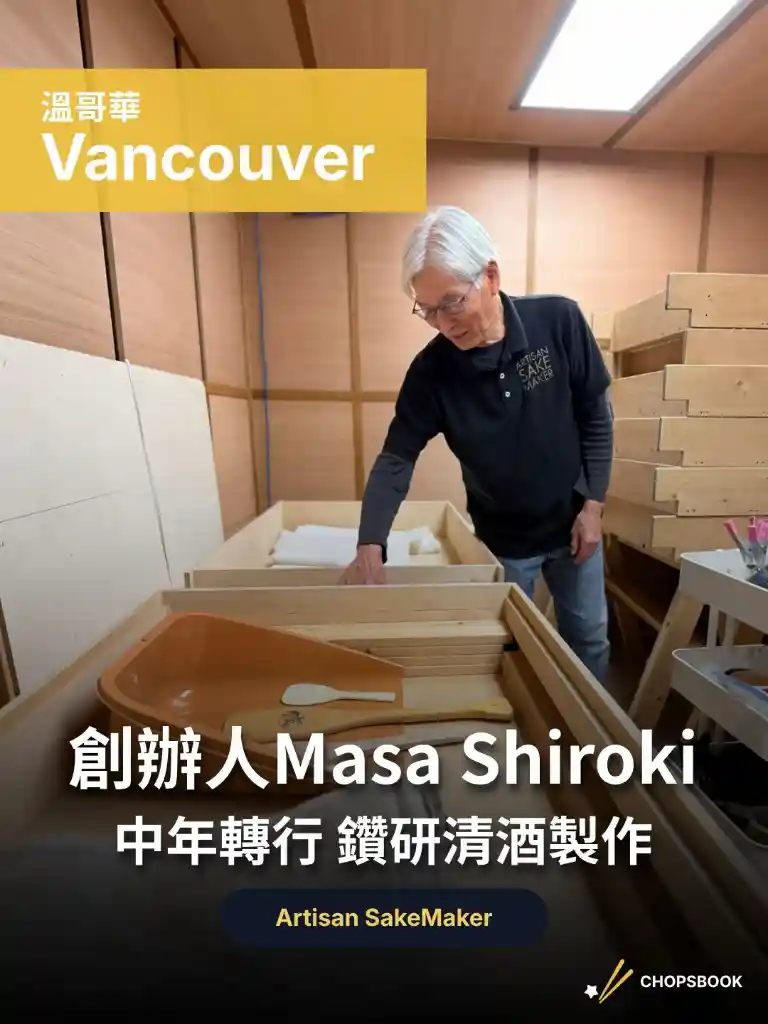
Founder Masataka Shiroki, known as Masa, is himself sensitive to alcohol, and sake was not his first career. Around the age of fifty, finding his work unfulfilling, he took a wine course, then combined that with his earlier experience in promotion and trade and moved into the sake world. Today he runs the brewery with his wife Yukiko, overseeing every step by hand, from growing rice and washing it to steaming, making koji, fermenting, pressing, filtering and bottling.
Masa describes looking after koji as needing more patience than looking after a child, because koji cannot tell you what it needs. Small shifts in temperature, humidity or timing change the result, and he has stayed overnight at the brewery to watch a fermentation. That handmade approach sits at the centre of OSAKE: equipment made to order, and manual work kept at every step, not for nostalgia, but because small-scale production is what makes that level of control possible.
What he most wants to change is how people misunderstand sake. Many assume it must be served hot, or only with Japanese food. His answer is to treat sake the way people treat wine: pay attention to aroma, acidity, texture and umami, then think about what it goes with. OSAKE is blended for Western food, with the rice, koji, fermentation time and temperature all chosen with that pairing in mind.
From BC rice fields to the glass
What makes OSAKE most distinctive is its rice. The brewery began trial rice cultivation in 2009, testing fields in Kamloops, Ashcroft, Agassiz and Vancouver Island before settling in the Fraser Valley. After seven years of experiments, it released its first sake made entirely with Canadian ingredients in 2015. Today the rice comes mainly from partner farms in Abbotsford and South Surrey, covering about 16 acres in total.
Not every OSAKE uses the same rice. Selected releases are made with rice seed originating from Hokkaido, combined with British Columbia's clean, soft water to produce a lighter-bodied style. The official site explains that sake is shaped by four elements, rice, water, koji and yeast, and that Artisan SakeMaker combines traditional Japanese technique with a modern winemaker's approach. The aim is not to copy Japanese sake, but to brew a sake that belongs to British Columbia.
That local character goes beyond ingredients. The brewery supplies sake kasu to Vancouver restaurants including Burdock & Co., Tojo's and Kishimoto, and its rice appears on tables at Pearl Morissette, Pluvio and The Acorn. In other words, the output of this small brewery has already found its way into kitchens across Canada's food scene.
How to taste OSAKE: a flight guide
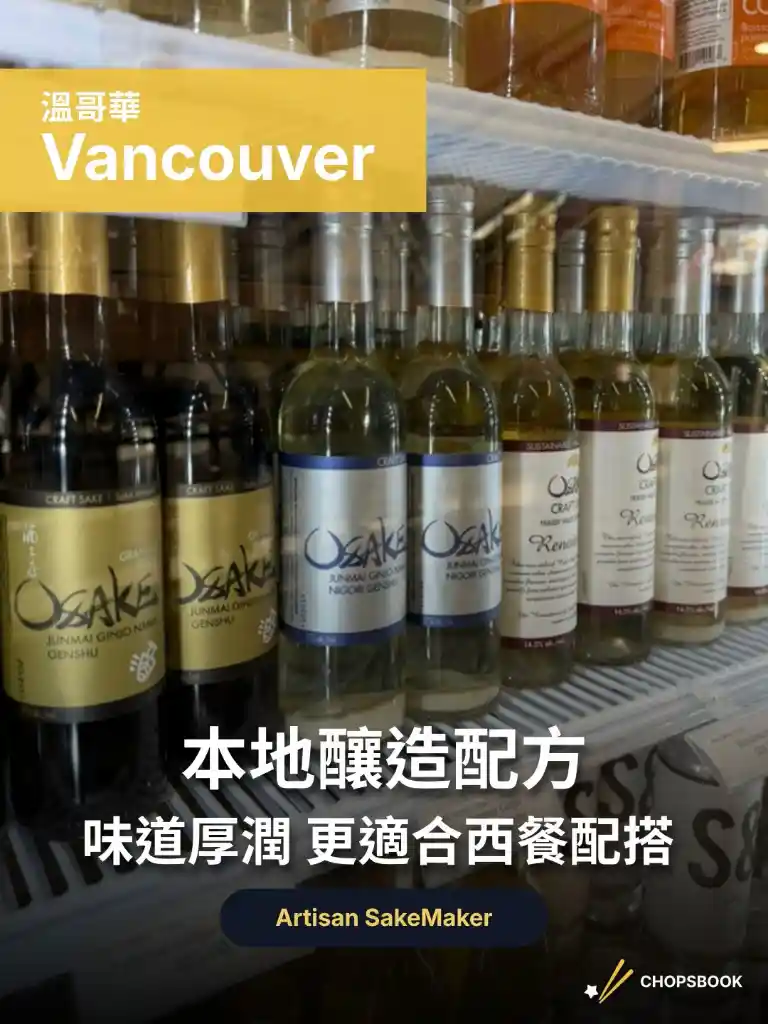
For a first visit, the simplest approach is a tasting flight. Sake & Tapas Central offers three OSAKE flights, plus a sake cocktail flight, CMC imported sake flights and a liqueur flight. Each flight samples several styles side by side, which makes comparison easy.
The Signature & Traditional flight is the starting point, covering Junmai Nama, Junmai Nama Genshu and Junmai Nama Nigori. Junmai Nama is light, crisp and off-dry. Junmai Nama Genshu is unpasteurised and undiluted, so it tastes richer and more complex, with a melon aroma. Junmai Nama Nigori is a cloudy sake with a fuller body. For sparkling and fruit notes, the Specialty & Bubbly flight covers Junmai Sparkling, Junmai Nigori Sparkling and the Apple Yuzu Sake Cooler, the last of which is fresh and gently sweet, with apple and yuzu aromas, and a popular first choice.
Beyond OSAKE, the room also pours Japanese sake and shochu imported by CMC Sake + Wine Merchants, so visitors can compare local brewing with sake from Japan in one sitting. Sake cocktails include the Sake Sangria, Salty Dog and Artisan 75. Masa's pairing advice is simple: seafood, vegetables, cheese, grilled meats, tomato-based dishes and everyday home cooking all work. Do not think of sushi only.
Beyond the tasting: small plates, dessert and sake cocktails
Tasting does not have to happen on an empty stomach. The small plates at Sake & Tapas Central use local ingredients with a Japanese accent: the Wagyu Meatball Don with tomato sauce, rice and shishito peppers, the Karaage Bowl, the Onigiri Set, Octopus Carpaccio, Chicken Karaage, Shishito with Yuzu Aioli, Takoyaki, and Amazake Salted Edamame. Portions stay small, so several can be shared and compared.
Dessert is worth attention for Rice Cream, an ice cream made with sake kasu from the brewing process, produced with Coconama. It is rich and smooth, in plain, matcha, ginger and chocolate flavours, with alcoholic versions in sake raisin and yuzu sorbet. There is also a chocolate ganache made with sake kasu, again with Coconama.
For those who do not want straight sake, the cocktail list includes the Sake Sangria, Salty Dog and Artisan 75, all built on a sake base. The shop also sells bottles to take home, along with OSAKE-related products such as sake kasu, condiments, rice and amazake, and skincare made with sake kasu.
Practical information
The address is 1339 Railspur Alley, Vancouver, BC V6H 4G9, on Railspur Alley on Granville Island, near the Public Market. The phone number is (604) 685-7253, the official site is artisansakemaker.com, and the Instagram account is @artisansake.
Inside, take a seat in the Sake & Tapas Central tasting room, choose a flight, and add a few small plates. Staff explain the flavour of each pour and what it goes with, so first-time visitors need no prior knowledge. Bottles of OSAKE and related products are sold in the shop for taking home. The legal drinking age in British Columbia is 19.
Frequently asked questions
The most common questions about Artisan SakeMaker, answered from the official site and public reporting.
Where is Artisan SakeMaker?
What is OSAKE?
How is Vancouver sake different from Japanese sake?
What should I try on a first visit?
Can I visit if I do not drink alcohol?
Can I buy sake to take home?
Related articles
Explore more
Last updated: October 31, 2026